Reduce Cooling Costs with Reflective Roofing Systems
TPO Commercial Roofing in Richmond for flat or low-slope buildings with rising energy expenses
Superior Roofing Solutions installs TPO roofing systems for commercial buildings across Richmond where flat and low-slope roofs dominate warehouses, retail centers, and industrial facilities. You depend on a roofing membrane that controls heat absorption while standing up to weather extremes, UV exposure, and the chemical residue common around HVAC units and exhaust vents. TPO membranes deliver both energy performance and structural durability in a single-ply system that reflects sunlight rather than trapping it inside your building.
This service involves installing thermoplastic polyolefin membranes over your existing roof deck or insulation layer. The material resists UV degradation, punctures from foot traffic, and moisture intrusion that leads to interior leaks. Seams are heat-welded rather than glued, creating watertight bonds that hold up under thermal expansion and contraction. The white or light-colored surface reflects solar radiation, which lowers the temperature of your roof deck and reduces the load on your cooling system during summer months.
Contact Superior Roofing Solutions to schedule an installation estimate and determine whether TPO roofing fits your building's layout and operational needs.
What Happens During TPO Membrane Installation
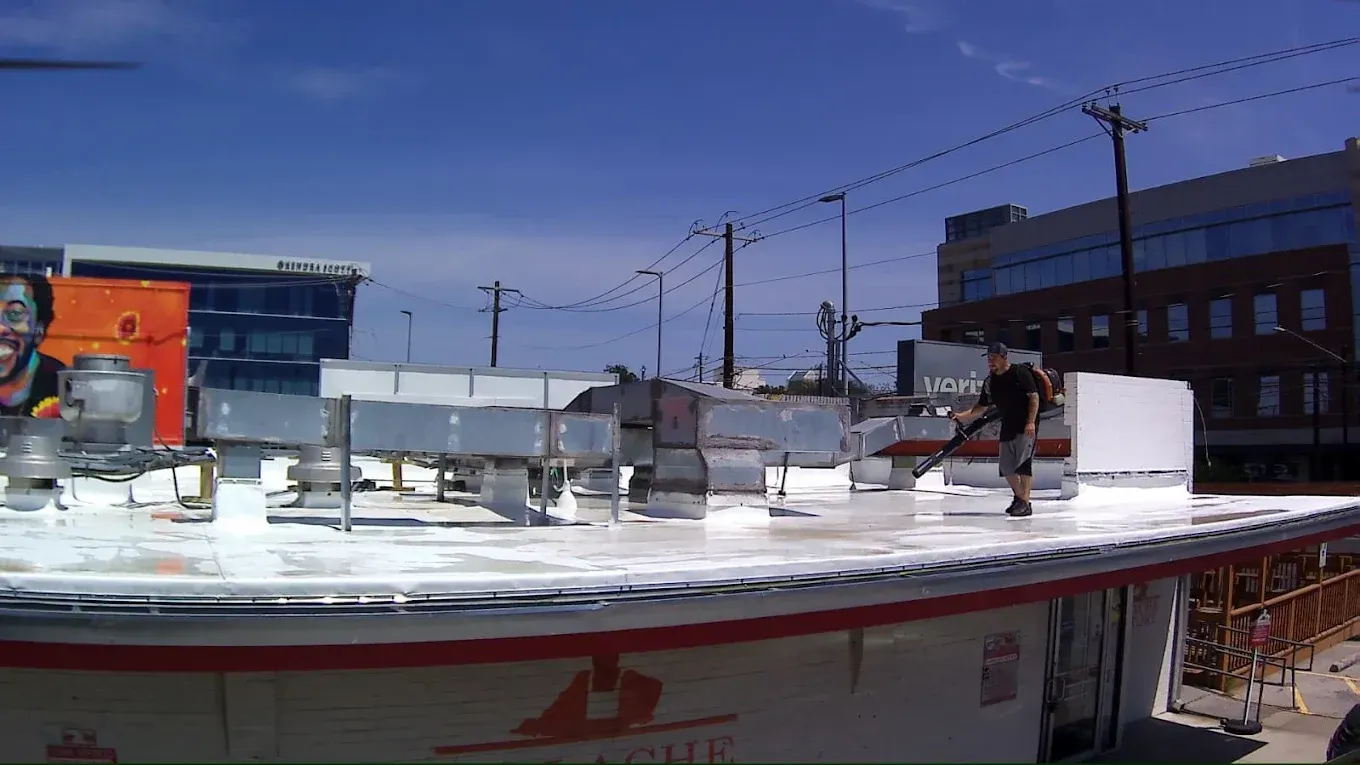
Your project begins with surface preparation, which includes cleaning the roof deck, repairing damaged substrate, and installing insulation boards if your building requires improved thermal performance. The TPO membrane is rolled out in large sheets and mechanically fastened or fully adhered depending on wind uplift requirements and roof design. Seams are welded using hot-air equipment that fuses the membrane layers together, forming a continuous waterproof barrier across the entire roof.
After installation, you will notice a cooler interior environment during peak afternoon heat, especially in buildings without climate-controlled spaces. The reflective surface visibly reduces surface temperatures compared to darker roofing materials, and your HVAC system will cycle less frequently. Superior Roofing Solutions ensures that all penetrations, such as vents and pipe boots, are properly flashed and sealed to prevent water entry at vulnerable points.
The system is designed for long-term performance, but it does not eliminate the need for periodic inspections. Foot traffic, debris accumulation, and ponding water can still compromise membrane integrity over time. Proper drainage and routine maintenance extend the functional lifespan of the roof and help you avoid premature replacement costs.
Questions About TPO Roofing for Commercial Buildings
Building owners often ask how TPO roofing compares to other flat roof systems and what maintenance responsibilities come with the material.
What makes TPO roofing different from EPDM or modified bitumen?
TPO uses heat-welded seams instead of adhesive, and its reflective surface reduces heat absorption more effectively than darker membranes.
How long does a TPO roof last on a commercial building?
You can expect fifteen to twenty years of service with proper installation and regular inspections, though heavy foot traffic or poor drainage can shorten that timeframe.
Why do seams matter in a single-ply roofing system?
Seams are the most vulnerable part of any membrane roof, and heat welding creates a stronger, more watertight bond than tape or liquid adhesives.
When should I schedule a TPO roof inspection in Richmond?
Plan inspections after severe storms, at least once per year, and any time you notice interior water stains or visible membrane damage.
What building types benefit most from TPO roofing?
Warehouses, retail centers, and industrial facilities with flat or low-slope roofs see the greatest energy savings and durability benefits from reflective TPO membranes.
Superior Roofing Solutions provides installation estimates that account for your building's size, roof access, and existing conditions. Reach out to discuss your commercial roofing project and review material options suited to your facility's operational demands.